
Coworking in Luxembourg City: neighbourhoods and addresses
Coworking in Luxembourg City: history of Ville-Haute, Gare, Bonnevoie, Gasperich, Belair, Kirchberg, Limpertsberg, Hamm and Dommeldange, and 28 spaces.
Picking a coworking space also means picking a neighbourhood: where to have lunch, where to walk between meetings, what to do after work. This guide covers the nine Luxembourg City neighbourhoods where CoworkingAvis lists spaces, 28 in total: Ville-Haute, the historic centre; Gare, around the central station; Bonnevoie, just east of Gare; Gasperich, with Ban de Gasperich and Cloche d'Or, to the south; then, more briefly, Belair, Kirchberg, Limpertsberg, Hamm and Dommeldange. For each: a little history, places to see, somewhere to eat, and the coworking spaces in the area.
Checked on 5 November 2026 (Europe/Luxembourg). Opening hours can change: confirm on the venue's official site before you go. No ratings, reviews or prices are repeated here.
Ville-Haute, the historic centre
A little history
Ville-Haute (Uewerstad in Luxembourgish) is one of Luxembourg City's 24 neighbourhoods and its historic centre, covered by UNESCO World Heritage protection. Its boundaries largely follow those of the old fortress of Luxembourg, mostly dismantled after the Treaty of London in 1867. The story starts in 963, when Count Siegfried acquires the rocky Bock promontory. A small fort, "Lucilinburhuc", gives Luxembourg its name. The town that grows west of the rock is granted city rights by Countess Ermesinde in 1244.
Places to see
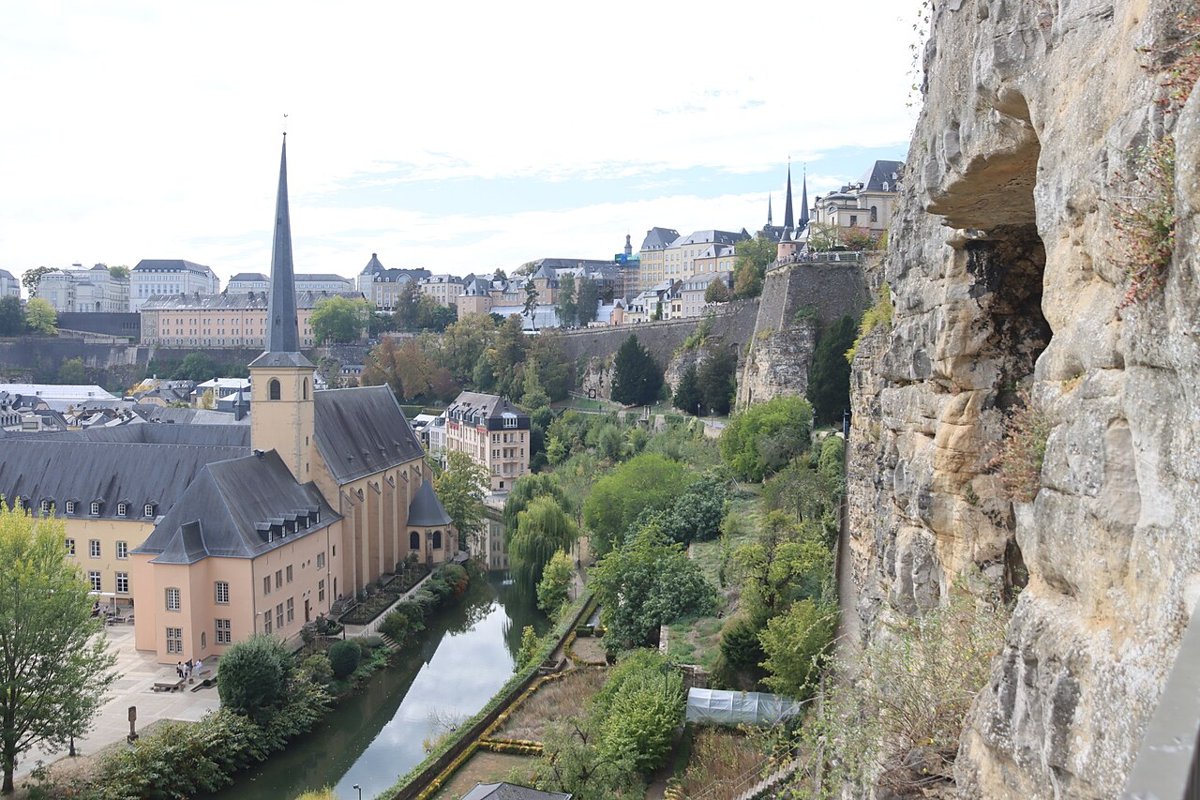
- The Bock promontory and its casemates: the rock where Siegfried established his castle in 963. The ruins of the old castle and the casemates, underground galleries from the former fortifications, sit inside the UNESCO World Heritage area.
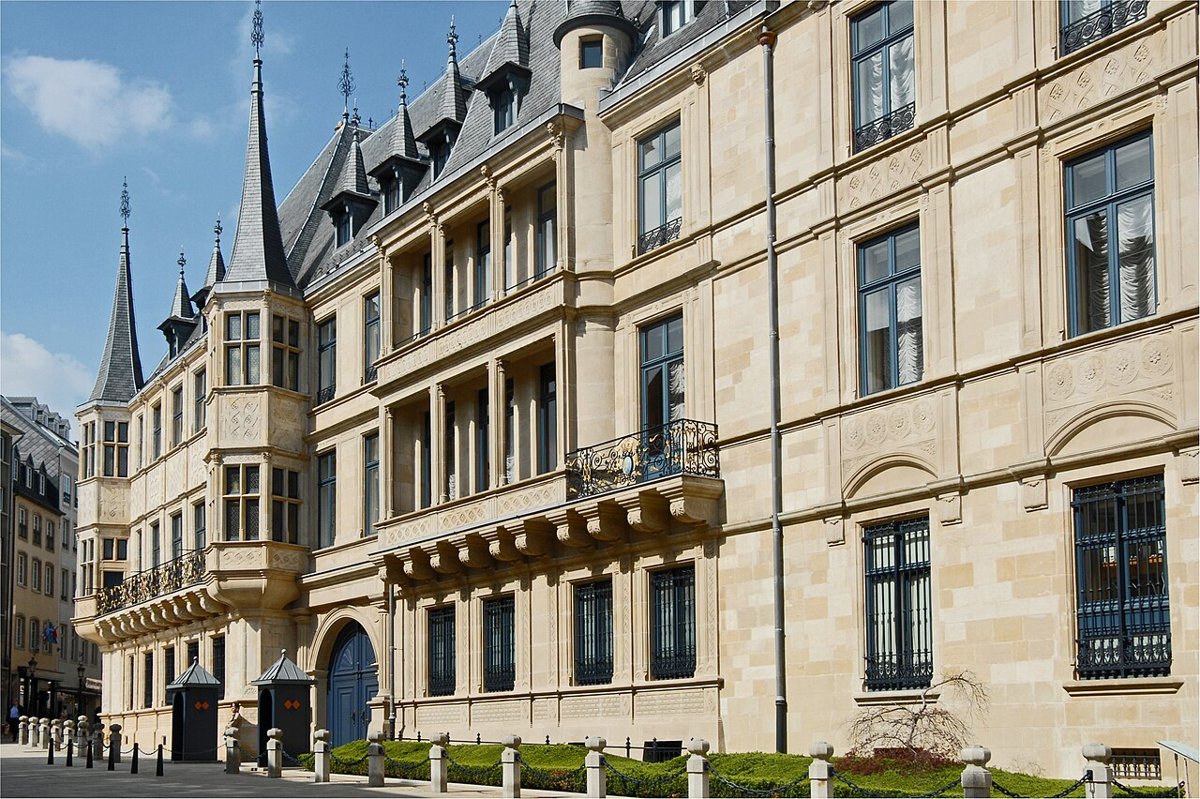
- The Grand Ducal Palace: a 16th-century Renaissance building and the Grand Duke's city residence. A formal changing of the guard takes place once a month.
- Notre-Dame Cathedral: built from 1613 to 1621 as the Jesuit college church, it became a cathedral in 1870.
- Place Guillaume II, which locals call "Knuedler": it is home to the city hall, built from 1830 to 1838 to plans by the Liège architect Julien-Étienne Rémont.
- Place d'Armes: laid out from the 17th century and completed in 1671, it is lined with cafes and restaurants and hosts Cercle Cite, bandstand concerts and the Christmas market.
Eating and going out
- Brasserie Guillaume, 12-14 place Guillaume II: brasserie, seafood and carpaccios. Open 7 days a week from 8:00 to midnight, according to its site (brasserieguillaume.lu).
- Oberweis Grand-Rue, 16 Grand-Rue: pastry shop and cafe-restaurant of the Oberweis house. Shop Monday to Saturday from 7:45 to 18:00, kitchen from 11:30 to 14:30 (oberweis.lu).
- Chocolate House Nathalie Bonn, 20 rue du Marché-aux-Herbes, opposite the Grand Ducal Palace: chocolate shop (chocolate-house-bonn.lu).
Working in the neighbourhood
CoworkingAvis lists 5 spaces in Ville-Haute:
- The Office - Suits, 33 boulevard Prince Henri
- The Office - City, 29 boulevard Prince Henri
- Coworkly Luxembourg-Ville, 2 rue du Nord
- Spaces - 53 Boulevard Royal, 53 boulevard Royal
- Regus - 26 Boulevard Royal, 26 boulevard Royal
The Gare neighbourhood
A little history
The Gare neighbourhood (Garer Quartier in Luxembourgish) takes its name from Luxembourg station. It once belonged to the old commune of Hollerich and has only been a city neighbourhood since the 1920 merger. The first station, built in wood, opened on 11 August 1859 with the country's very first line, towards Bettembourg and the French border. It was placed south of the Pétrusse, well away from the town of the time, because Luxembourg was still a fortress. After the fortress era ended in 1867, the Bourbon plateau was built up, notably along Avenue de la Liberté. The current station building was completed in 1912. Today the neighbourhood has 11,292 residents (2026), 81.6% of them non-Luxembourg nationals.
Places to see
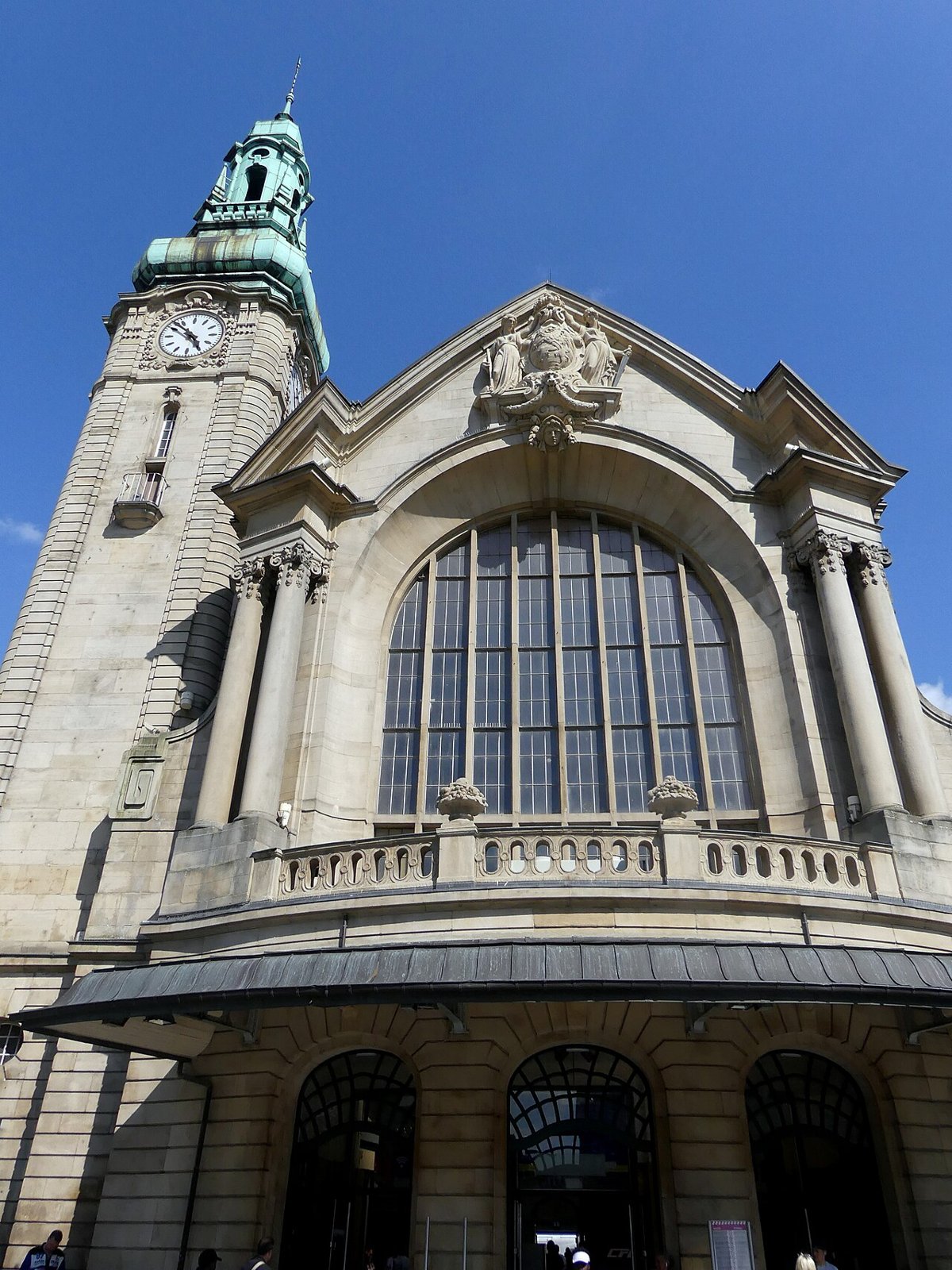
- Luxembourg station: the hub of the Luxembourg rail network, operated by the CFL, with links to Belgium, France and Germany. Since the Est Europeenne high-speed line opened in 2007, Paris is 2 hours 12 minutes away by train.
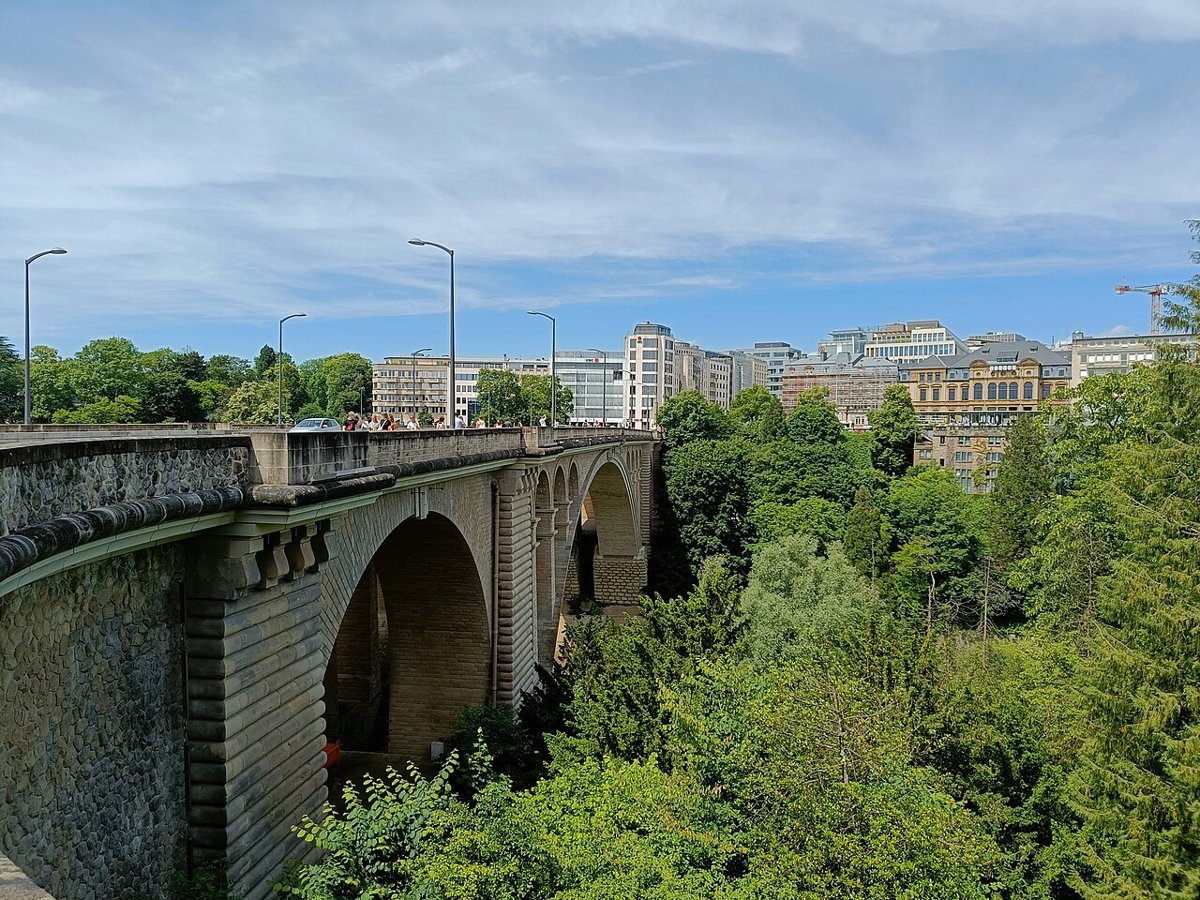
- Adolphe Bridge: opened to traffic in 1903 and named after Grand Duke Adolphe, it links Avenue de la Liberté to Boulevard Royal, in Ville-Haute, above the Pétrusse valley. The tram crosses it, and a suspended walkway under the deck is reserved for pedestrians and cyclists.
- The Passerelle (officially Pont Viaduc): it links Avenue de la Gare to Boulevard Franklin Delano Roosevelt. Its name comes from the old wooden footbridge it replaced.
- Avenue de la Liberté: the axis laid out on the Bourbon plateau after the fortress was dismantled, between the station and Adolphe Bridge.
Eating and going out
- Madame Jeanette, 9 rue de Strasbourg: bar-restaurant (madamejeanette.lu).
- Partigiano, 14 rue de Strasbourg: Italian restaurant (partigiano.lu).
- Stazione, 1 rue d'Anvers: restaurant. Monday to Thursday from 11:45 to 14:00 and from 18:45 to midnight, according to its site (stazione.lu).
- Kaito Place de Paris, 29 rue du Fort Elisabeth: Asian restaurant (kaito.lu).
- GGJD, 54 avenue de la Liberté: hot-pot restaurant. Monday to Friday from 11:30 to 14:30 and from 18:00 to 23:00, Saturday and Sunday from 18:00 to 23:00, according to its booking page (ggjd.lu).
Working in the neighbourhood
CoworkingAvis lists 11 spaces in the Gare neighbourhood:
- Spaces - 5 Place de la Gare, 5 place de la Gare
- Paladium - Le 57, 57 avenue de la Gare
- Ginkgo Center - The Avenue, 13 avenue de la Liberté
- Ginkgo Center - The Corner, 16A avenue de la Liberté
- Ginkgo Center - The Place, 2 place de Paris
- Seed Box Goethe, 5 rue Goethe
- Seed Box Mathias Hardt, 10 rue Mathias Hardt
- Seed Box Pétrusse, 124 boulevard de la Pétrusse
- Paladium - Le Fortuna, 130-132 boulevard de la Pétrusse
- Private Business Center, 32-36 boulevard d'Avranches
- Silversquare, 21 rue Glesener
Bonnevoie, around the Rotondes
A little history
Bonnevoie (Bouneweg in Luxembourgish) covers two Luxembourg City neighbourhoods, Bonnevoie-Nord / Verlorenkost and Bonnevoie-Sud. With more than 16,000 residents, it is the most populated part of the city. It goes back to a Cistercian convent founded in the 12th century and dissolved towards the end of the 18th. Like the Gare neighbourhood, Bonnevoie grew very quickly after the railway arrived in 1859. It too belonged to the commune of Hollerich until the merger with Luxembourg City on 27 March 1920. The physicist Gabriel Lippmann was born there in 1845.
Places to see
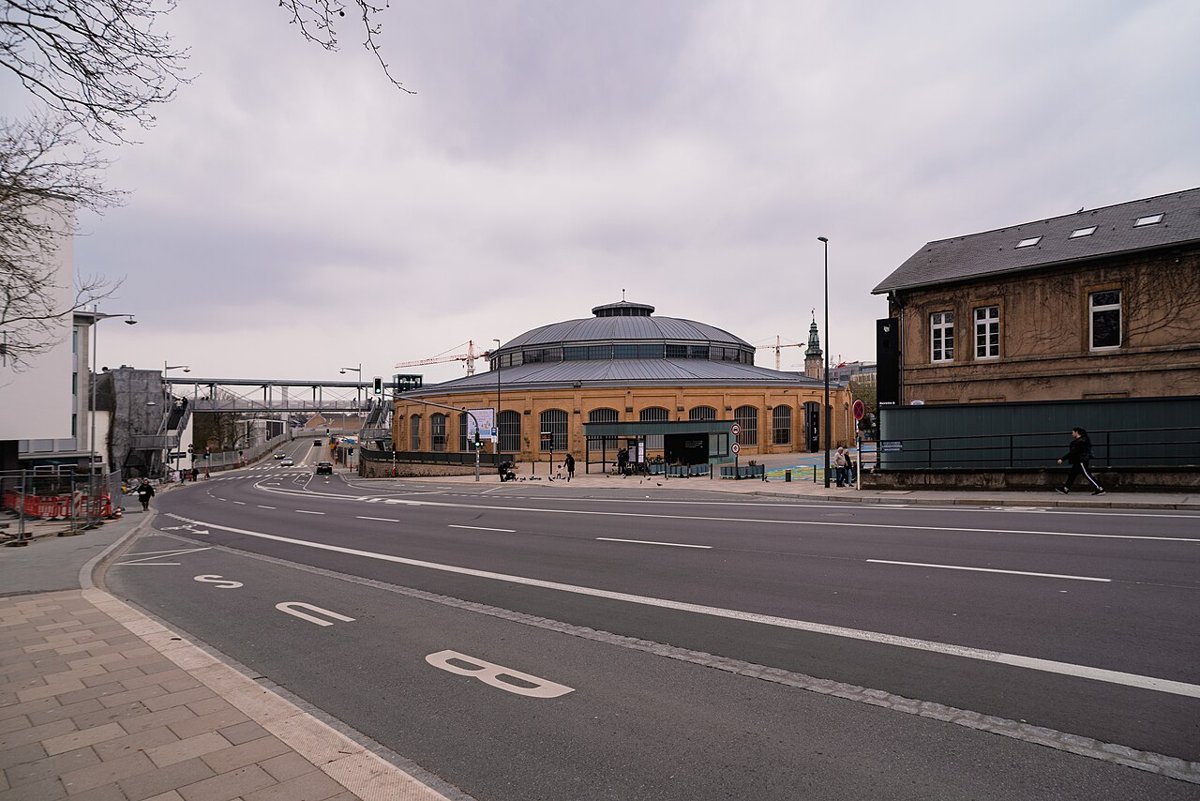
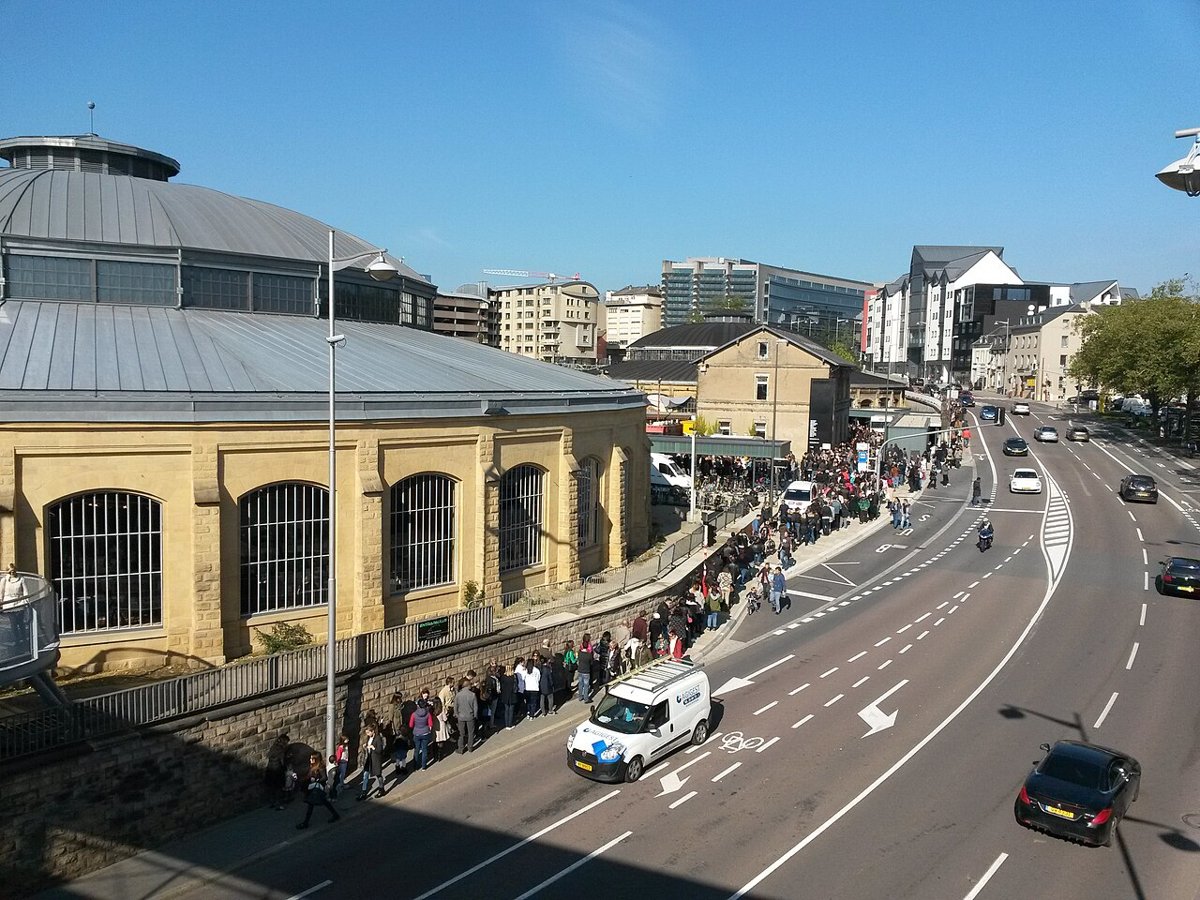
- The Rotondes, 3 place des Rotondes: two rotundas built in the 1870s to house steam locomotives, listed in 1985. Converted into a cultural venue, they were used for Luxembourg, European Capital of Culture 2007. They now host performing arts, contemporary music and visual arts (rotondes.lu).
- The Church of Mary Queen of Peace (1965), in Bonnevoie-Sud: it replaces the first parish church, consecrated in 1888 and destroyed by bombing in the Second World War.
Eating and going out
- O'Luso, 21 rue de Bonnevoie: Portuguese restaurant. Monday to Wednesday from 12:00 to 14:30, according to its site (restaurant-oluso.lu).
- AUPA Specialty Coffee, 45 rue de Bonnevoie: specialty coffee shop (aupacoffee.com).
- Bay of Bengal, 79 rue de Bonnevoie: Indian restaurant, open since 2010, with a lunchtime buffet. Closed on Tuesdays (bayofbengal.lu).
- Intense Coffee, 1 rue Auguste Charles: cafe. Monday to Friday from 7:30 to 18:00, weekends from 9:00 to 18:00, closed on public holidays (intensecoffee.lu).
Working in the neighbourhood
CoworkingAvis lists 2 spaces in Bonnevoie:
- Co:Work Rotondes, 3 place des Rotondes
- Paladium - La Gare Centrale, 10a rue du Puits
Gasperich, Ban de Gasperich and Cloche d'Or
A little history
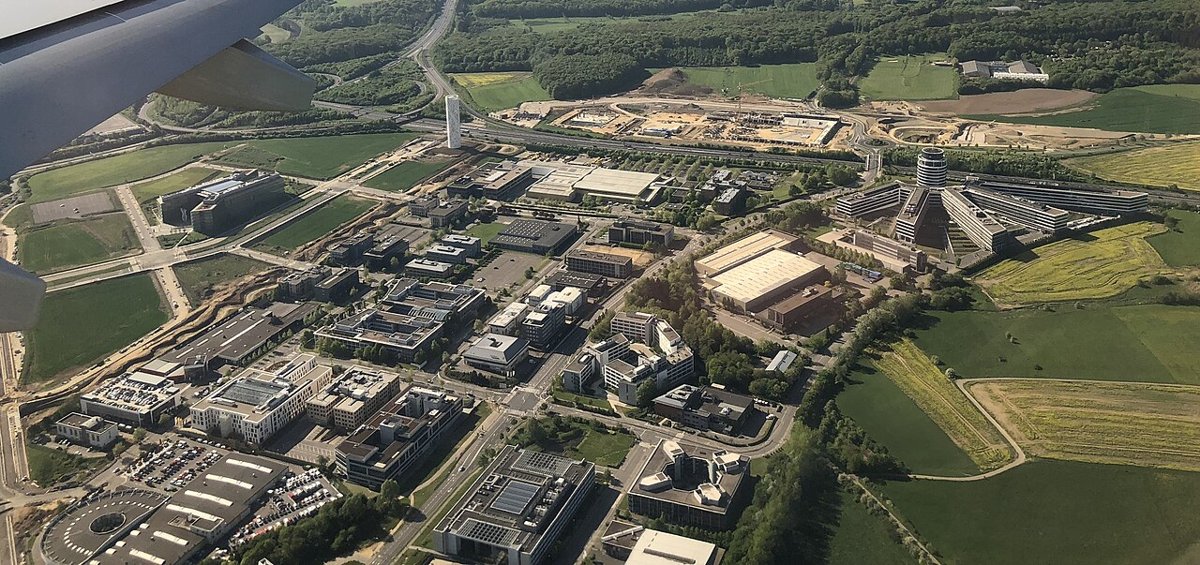
Gasperich (Gaasperech in Luxembourgish) stretches to the far south of the city, over 445 hectares. The name first appears in writing in 1083, in the founding charter of Altmünster Abbey, but a Celtic farm and several Roman villas stood there before the village. In Roman times, two roads already crossed the area. Cloche d'Or, a locality in Gasperich, takes its name from a hotel that opened on the old road to Esch. The area became industrial in the 1970s, then the hotel was demolished in 1985. Since the mid-2010s, housing, shops, a French school, a stadium and a large park have been built there. South of the neighbourhood, the Gasperich interchange is where the A1, A3 and A6 motorways meet.
Places to see
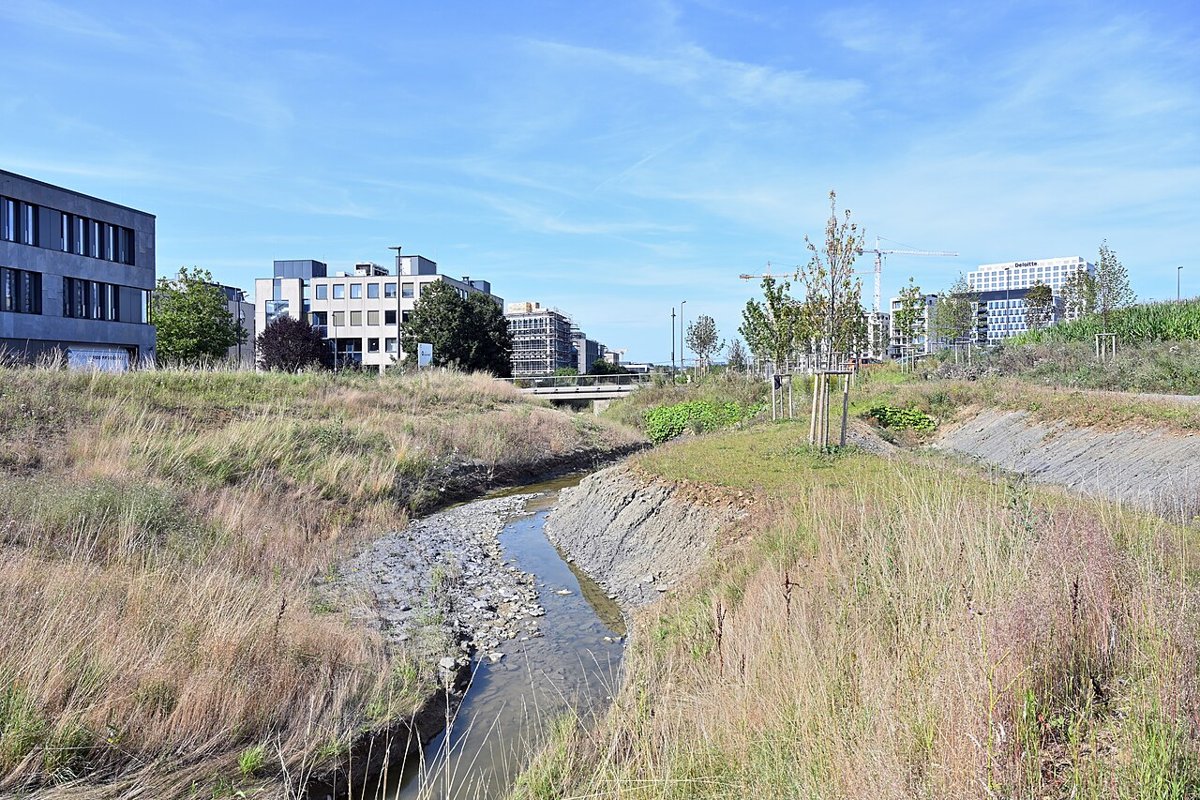
- Ban de Gasperich and its park: the area built since the mid-2010s, with housing, shops and a large park.
- The Drosbach: this stream rises near Leudelange, west of Cloche d'Or, and runs through Gasperich.
- Cloche d'Or Shopping Center, 25 boulevard Raiffeisen: shopping centre with a food court (clochedor-shopping.lu).
Eating and going out
- Vinissimo, 1 boulevard F.W. Raiffeisen: restaurant, delicatessen and wine cellar (vinissimo.lu).
- Bistro Oberweis Cloche d'Or, 1 rue Guillaume J. Kroll: shop and bistro of the Oberweis house. Tea room Monday to Friday from 7:00 to 17:15 and Saturday from 8:00 to 17:15, kitchen from 11:30 to 14:30 (oberweis.lu).
- Kaito Cloche d'Or, 17 rue Leonardo da Vinci: Asian restaurant (kaito.lu).
- The restaurants at Cloche d'Or Shopping Center: restaurants, kiosks and cafes, with an up-to-date list on the centre's site (clochedor-shopping.lu).
Working in the neighbourhood
CoworkingAvis lists 3 spaces in Gasperich and Cloche d'Or:
- Regus - Cloche d'Or, 11 rue Eugène Ruppert
- Regus - Rue Charles Darwin 5, 5 rue Charles Darwin
- Spaces - Rue de Gasperich, 18 boulevard de Kockelscheuer
Belair
Belair is a residential neighbourhood just west of Ville-Haute. Once part of the commune of Hollerich and attached to the city in 1920, it only developed after the fortress was dismantled in 1867. In 1887, this area then called "Neu-Merl" had 87 residents. It officially received the name Belair in 1956.
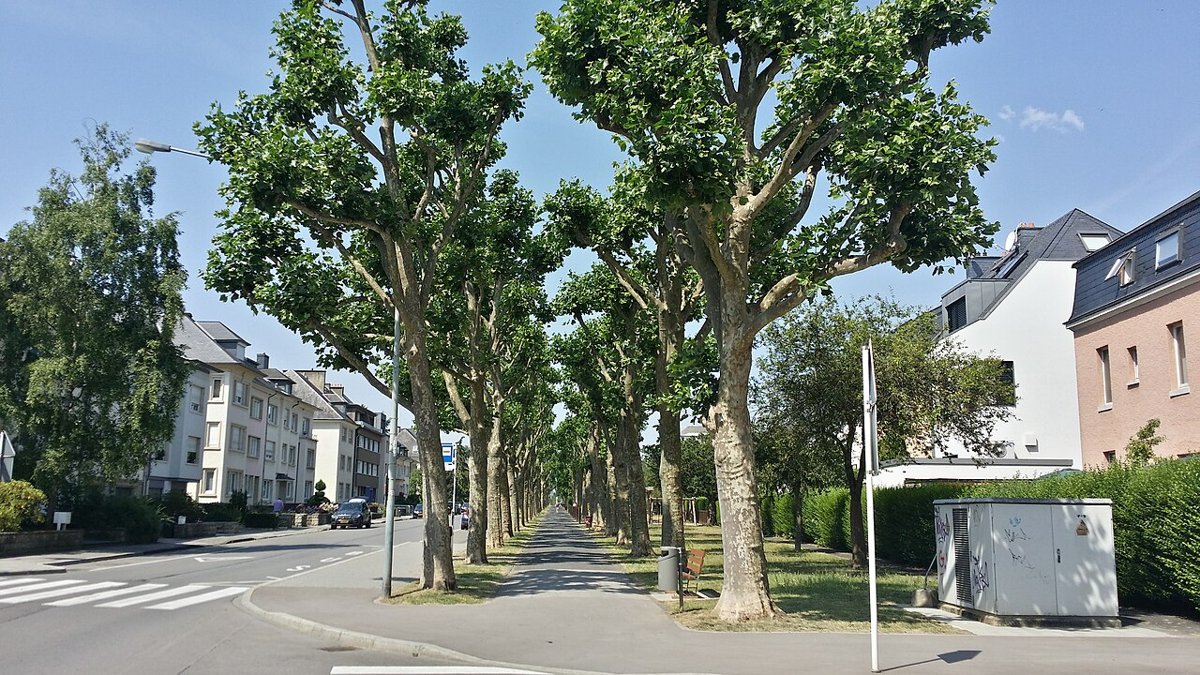
- Josy-Barthel Stadium, where the national football team played before the Stade de Luxembourg opened.
- The Church of St Pius X, built in the 1950s, and the Franciscan convent, built in the 1920s.
Coworking spaces in Belair:
- The Office - Charlotte, 29 boulevard Grande-Duchesse Charlotte
- Seed Box Grande-Duchesse Charlotte, 51 boulevard Grande-Duchesse Charlotte
Kirchberg
Kirchberg is a plateau north-east of the city, linked to Ville-Haute and Limpertsberg by the Grande-Duchesse Charlotte Bridge, nicknamed the "red bridge". First mentioned in 1222, it lived mainly from farming. Its urbanisation starts in the 1960s, after the European Coal and Steel Community settled in Luxembourg from 1952. It now hosts several European Union institutions, including the Court of Justice and the Court of Auditors.
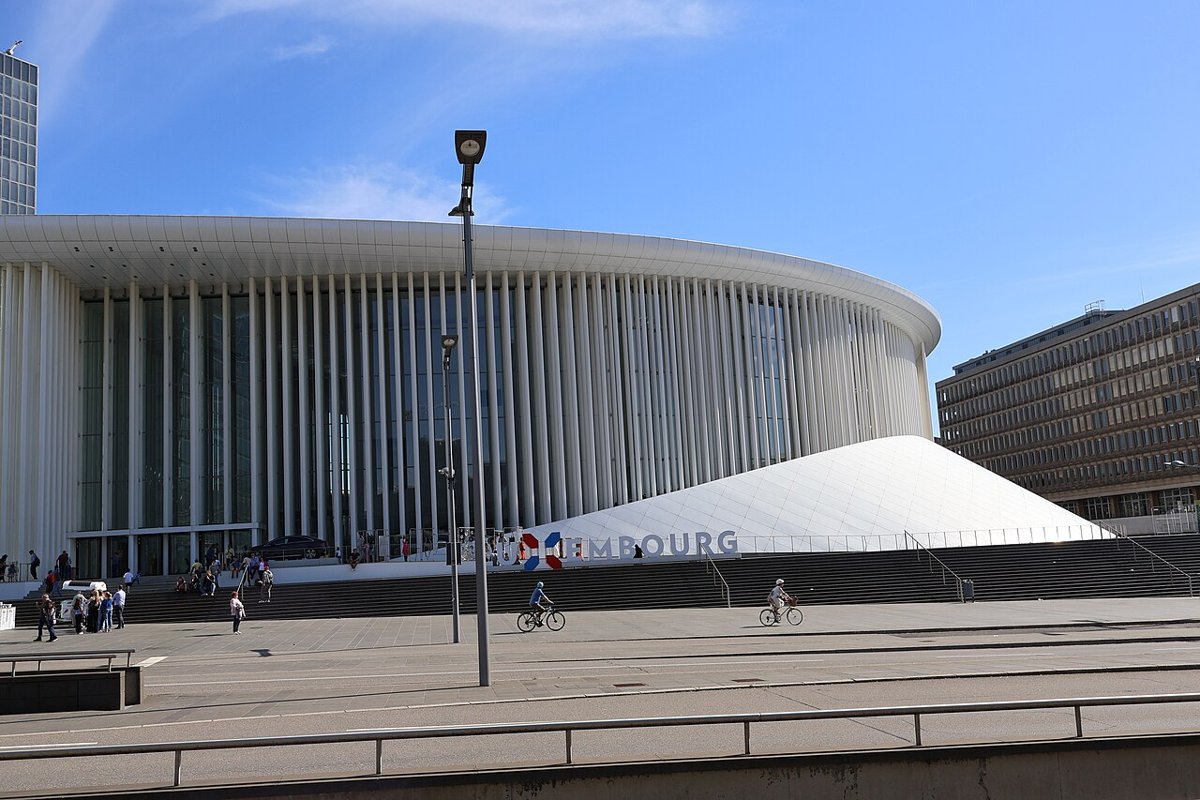
- Philharmonie Luxembourg: concert hall inaugurated in 2005.
- Mudam, the Grand Duke Jean Museum of Modern Art: a museum devoted to modern art, created in 1989 in honour of Grand Duke Jean, with architecture entrusted to Ieoh Ming Pei.
- The Grande-Duchesse Charlotte Bridge, over the Alzette valley.
To eat: Kaito Kirchberg, 5 rue Alphonse Weicker, Asian restaurant (kaito.lu).
Coworking space on Kirchberg:
- HQ - 43 Avenue JFK, 43 avenue John F. Kennedy
Limpertsberg
Limpertsberg sits just north of Ville-Haute. Before the ramparts were destroyed, it held only the Notre-Dame cemetery, laid out in 1755. After 1867, this farming plateau, known for its rose growers, became an urban neighbourhood in the first half of the 20th century. The first primary school opened in 1906, the church was consecrated in 1912.
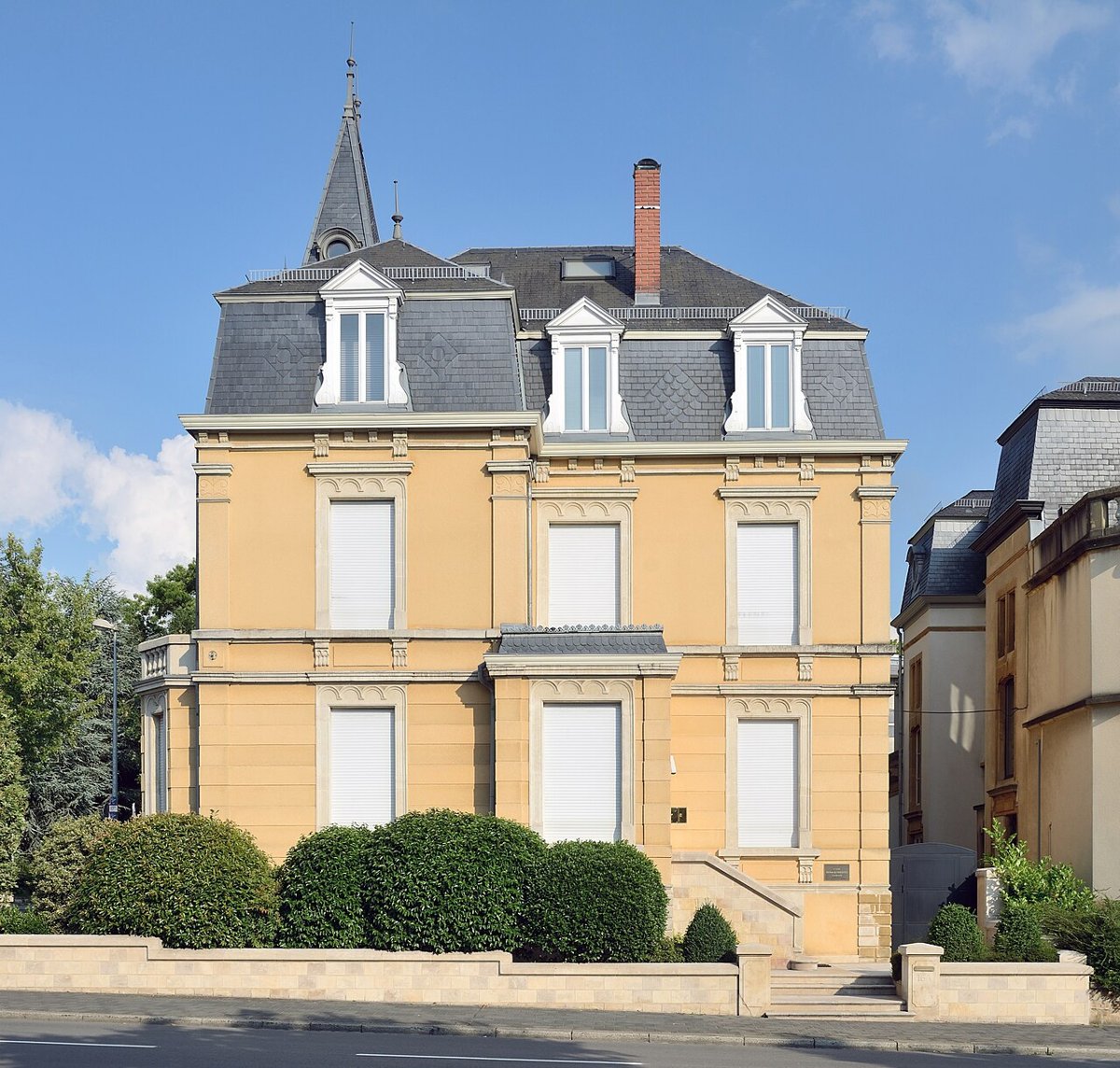
- The Notre-Dame cemetery, laid out in 1755.
- The boys' lycee, opened in 1908 under the name Lycee des Arts et Metiers, the neighbourhood's first public secondary school.
For a coffee: Intense Coffee, 61 avenue Pasteur (intensecoffee.lu).
Coworking space in Limpertsberg:
- Ginkgo Center - The City, 14 avenue Pasteur
Hamm
Hamm, to the east of the city, is one of the least populated neighbourhoods (1,606 residents in 2026). Its name appears in 1243 in a purchase deed. The choir of its church, consecrated in 1337, dates from the time of a monastery dedicated to Saint Catherine. In 1830, a textile factory founded at Schleifmuhle made the population grow, and Hamm became an independent commune in 1874, before being attached to the city in 1920.
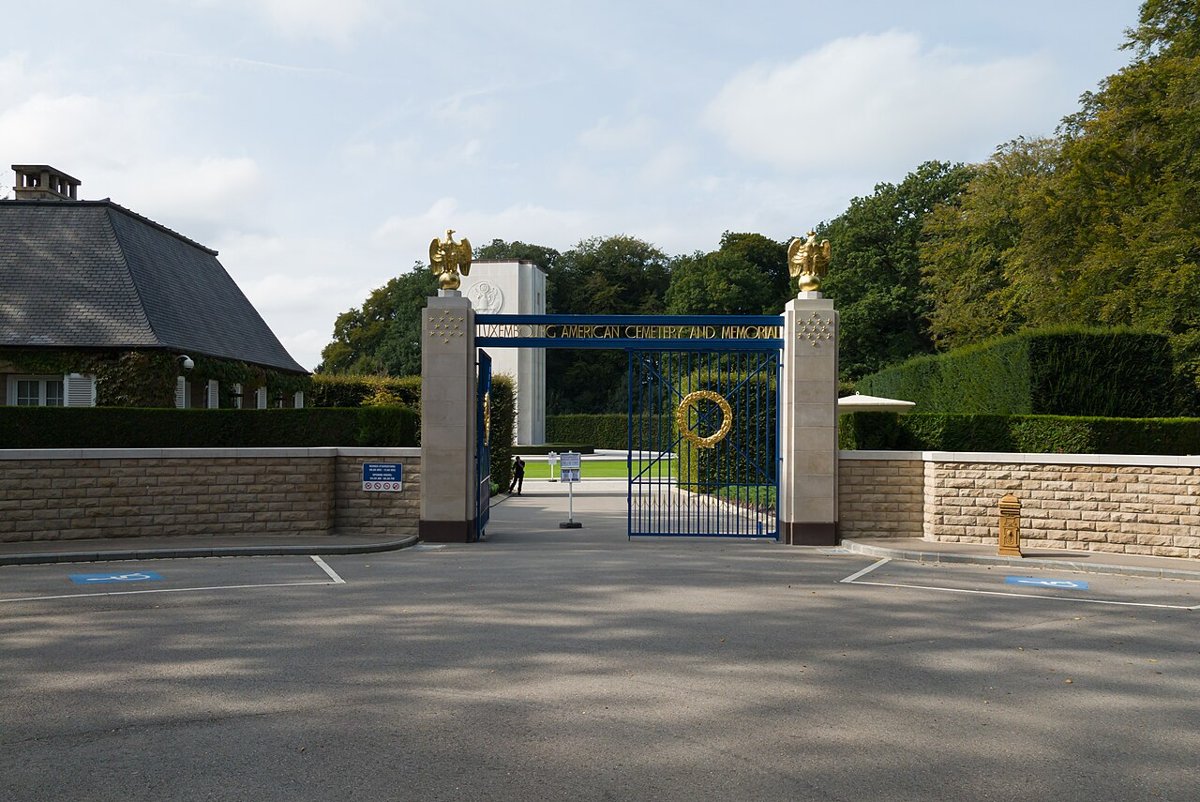
- The Luxembourg American Cemetery and Memorial: since 1944, it has held the graves of American soldiers of the Second World War and the Battle of the Bulge, including that of General Patton.
- The church of Hamm, whose choir was consecrated in 1337.
We have not confirmed a restaurant address in Hamm on an official site. The neighbourhood is served by Cents-Hamm station.
Coworking space in Hamm:
- Paladium - Le Pal'Art, 20 rue des Peupliers
Dommeldange
Dommeldange, at the far north-east of the city, belonged to the commune of Eich until it was attached to Luxembourg on 1 July 1920. Its history is industrial: the Grunewald forge has belonged to the Collart family since 1777, then the opening of the Luxembourg-Ettelbruck line in 1862 led to the building of two blast furnaces. The Dommeldange field is the highest point in the city.
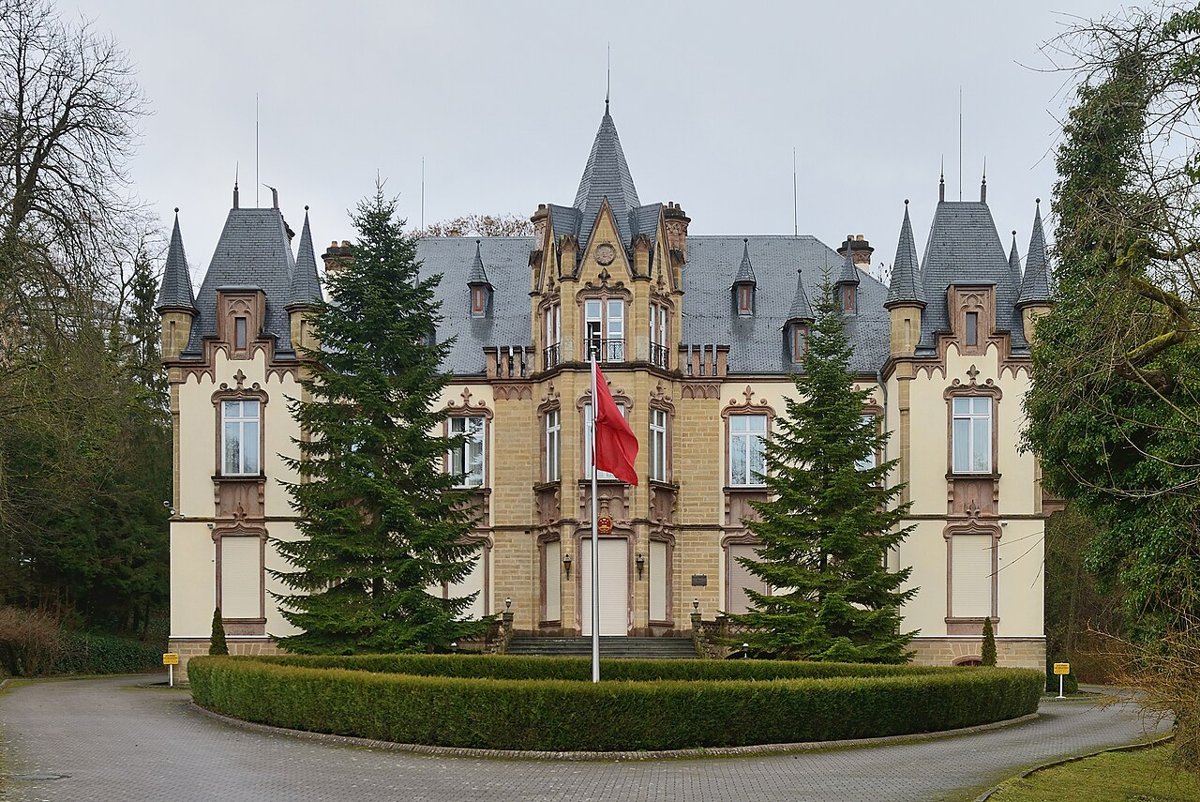
- Dommeldange Castle, former home of the Collart family.
- The Church of St Hubert, in the old centre, by the Alzette.
We have not confirmed a restaurant address in Dommeldange on an official site.
Coworking spaces in Dommeldange:
- Colors Business Center Dommeldange, 2 rue Jean Engling
- Bamhaus, 18A/18D rue de la Cimenterie
All of the city's spaces are on the coworking in Luxembourg page.
Frequently asked questions
Which Luxembourg City neighbourhoods have the most coworking spaces on CoworkingAvis?
The Gare neighbourhood comes first, with 11 spaces. Then come Ville-Haute (5), Gasperich and Cloche d'Or (3), then Bonnevoie, Belair and Dommeldange (2 each), and finally Kirchberg, Limpertsberg and Hamm (1 each).
Can you walk from the station to the historic centre?
Yes. Two bridges link the Gare neighbourhood to Ville-Haute over the Pétrusse valley: the Passerelle, from Avenue de la Gare, and Adolphe Bridge, from Avenue de la Liberté, with a walkway reserved for pedestrians and cyclists under its deck.
Where is Cloche d'Or?
Cloche d'Or is a locality in the Gasperich neighbourhood, south of Luxembourg City, near the Gasperich interchange.
Are the opening hours up to date?
They were taken on 5 November 2026 from the venues' official sites. They can change: check before you go.
Coworking spaces nearby
- The Office – Suits (Luxembourg)
- Ginkgo Center – The Avenue (Luxembourg)
- The Office – City (Luxembourg)
- The Office – Charlotte (Luxembourg)
- Silversquare (Luxembourg)
- Paladium – La Gare Centrale (Luxembourg)
- Paladium – Le 57 (Luxembourg)
- Paladium – Le Fortuna (Luxembourg)
- Paladium – Le Pal'Art (Luxembourg)
- Coworkly Luxembourg-Ville (Luxembourg)
- Colors Business Center Dommeldange (Luxembourg)
- Seed Box Mathias Hardt (Luxembourg)
- Seed Box Pétrusse (Luxembourg)
- Seed Box Goethe (Luxembourg)
- Seed Box Grande-Duchesse Charlotte (Luxembourg)
- Spaces – 53 Boulevard Royal (Luxembourg)
- Regus – 26 Boulevard Royal (Luxembourg)
- Spaces – 5 Place de la Gare (Luxembourg)
- Regus – Rue Charles Darwin 5 (Luxembourg)
- Spaces – Rue de Gasperich (Luxembourg)
- Regus – Cloche d'Or (Luxembourg)
- HQ – 43 Avenue JFK (Luxembourg)
- Bamhaus (Luxembourg)
- Private Business Center (Luxembourg)
- Co:Work Rotondes (Luxembourg)
- Ginkgo Center – The City (Luxembourg)
- Ginkgo Center – The Corner (Luxembourg)
- Ginkgo Center – The Place (Luxembourg)